Self-Hosting Overview
Self-hosting Rivet gives you complete control over the actor orchestration platform and infrastructure.
Self-Host vs BYOC
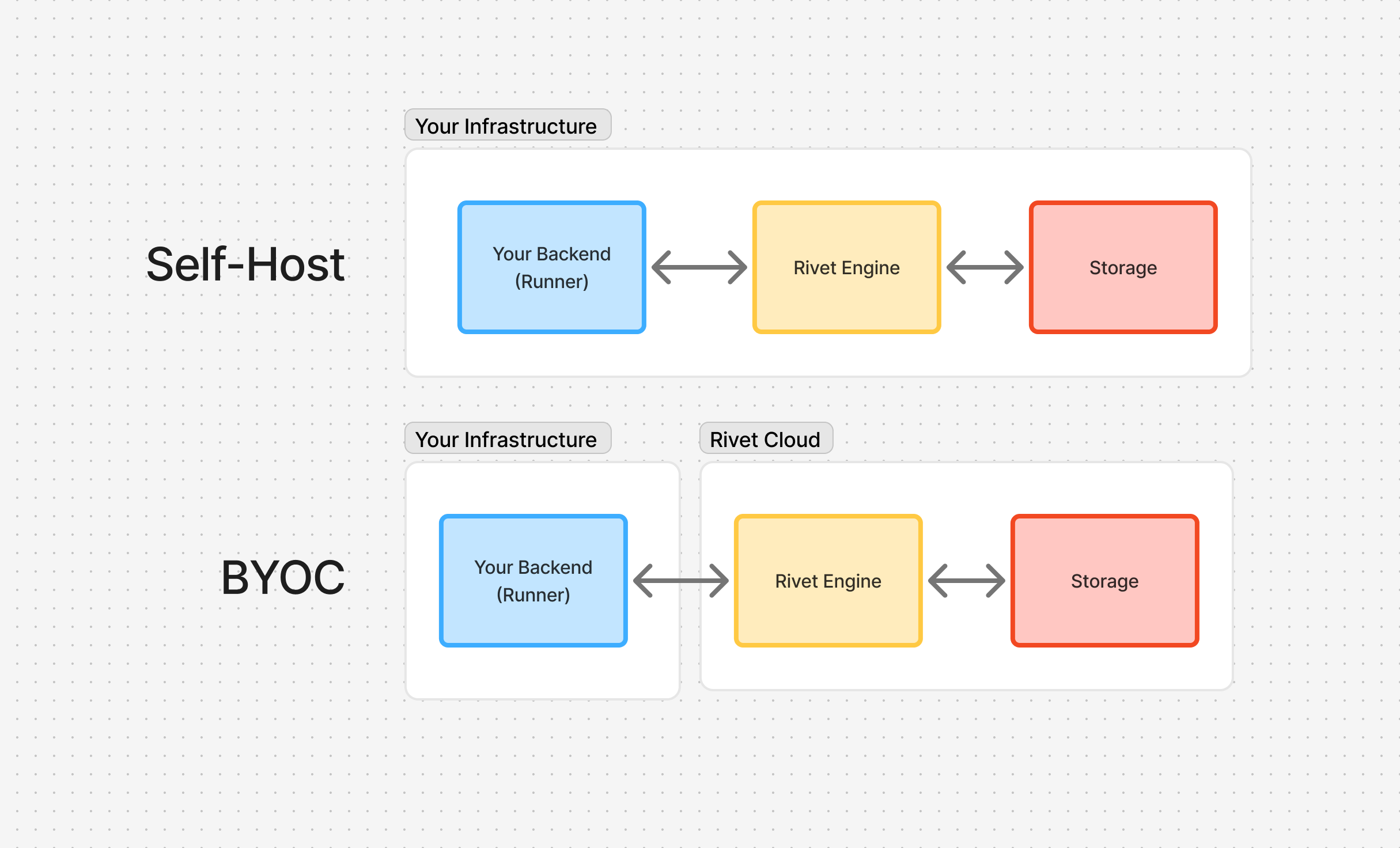
Rivet supports both BYOC (Bring Your Own Cloud) and self-hosting to fit your deployment needs.
| Self-Hosting | BYOC with Rivet Cloud | |
|---|---|---|
| You Manage | Full stack (your backend, engine, Rivet Engine, database) | Only your backend |
| Complexity | Higher (full stack deployment) | Lower (connect and deploy) |
| Cost | Higher operational overhead | Usually lower usage-based cost |
| Supports Serverless | Requires extra infrastructure | Yes |
| Air-Gapped Deployments | Yes | No |
| Best For | Air-gapped environments, strict compliance, custom security policies | All other production deployments |
| Support | Contact sales or community | Community, Slack, and email (varies by plan) |
| Documentation | Continue below | See connect guides |
Architecture
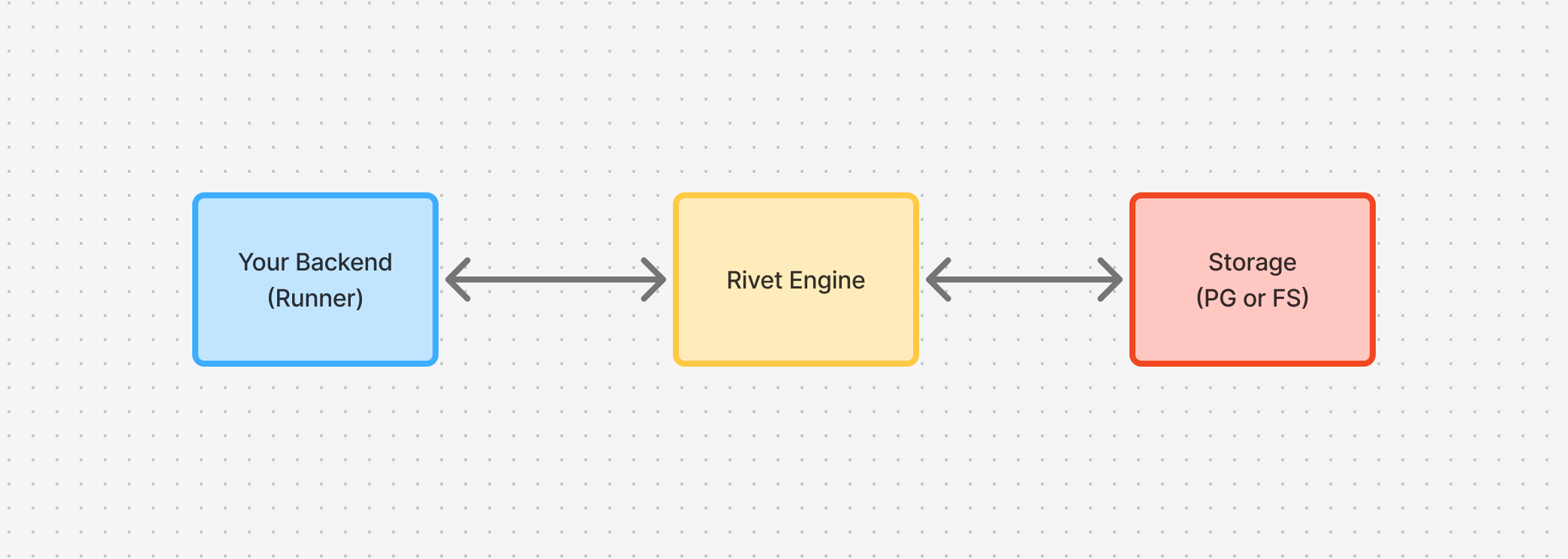
Rivet has 3 core components:
- Your Backend: Your application server that handles user requests and includes a runner component that executes actor code
- Rivet Engine: Main orchestration service that manages actor lifecycle, routes messages, and provides APIs
- Storage: Persistence layer for actor state and messaging infrastructure for real-time communication
Storage Backends
Rivet supports multiple storage backends:
- File System: Suitable for single-node deployments
- PostgreSQL: Recommended for production
- FoundationDB: For massive scale (requires enterprise)
Deployment Platforms
Deploy Rivet on your preferred platform:
- Docker Container
- Docker Compose
- Railway
- Kubernetes
- AWS Fargate
- Google Cloud Run
- Hetzner
- VM & Bare Metal
Self-hosting guides coming soon.